How to Check Bicycle Brake Pads, Rotors and Cables on a Used Bike

Brakes are the most safety-critical system on any bicycle. A worn brake pad, a warped rotor or a fraying cable can be the difference between stopping safely and a serious incident – and on a used bike purchased from a private seller, there’s no warranty and no comeback once you’ve handed over the money.

This guide walks you through exactly how to inspect the braking system on any used bicycle in Australia, whether it has rim brakes, mechanical disc brakes or hydraulic disc brakes. We cover what good looks like, what bad looks like, and when something warrants a professional assessment before you commit to buying.

Understanding the Three Brake System Types

Before inspecting any used bike, identify which brake system you’re dealing with. Each has different wear indicators and failure modes.

Rim brakes (V-brakes, calliper brakes)

Rim brakes squeeze rubber pads directly against the wheel rim to slow the bike. They’re common on older road bikes, hybrid bikes and entry-level models. Lighter and simpler than disc brakes, but highly susceptible to wet weather performance degradation and rim surface wear.

Mechanical disc brakes

A cable pulls a mechanical caliper that squeezes pads against a metal rotor mounted near the wheel hub. Better wet-weather performance than rim brakes. Common on gravel bikes, entry-level MTBs and commuter bikes. The cable and housing still wear and need inspection.

Hydraulic disc brakes

Brake fluid in a sealed hose system actuates a caliper. Superior modulation and stopping power, especially in wet Australian conditions. Common on quality mountain bikes, gravel bikes and higher-end road bikes. No cable to fray, but the fluid line and seals require their own inspection.

Step 1: Inspect the Brake Pads

Disc brake pads – what to check

Disc brake pads are located inside the caliper, which sits over the rotor. On most bikes you can peer into the caliper gap to see them. Here’s the standard inspection process:

  • Check pad thickness: A new disc brake pad is typically around 4mm of compound material. Pads need replacement when the compound drops below 1mm. At this point the metal backing plate is very close to contacting the rotor – causing metal-on-metal damage that can cost $60–$150 per rotor to fix.
  • Look for the wear groove: Many pads have a small groove stamped across the face. When this groove disappears, the pad has reached minimum safe thickness and must be replaced immediately.
  • Check for contamination: Oil, grease or chain lube on a brake pad destroys stopping power. Look for a shiny, glazed surface – contaminated pads often squeal loudly and provide unpredictable braking. Contaminated pads can rarely be fully cleaned and usually require replacement.
  • Check both pads per wheel: Each caliper holds two pads – one on each side of the rotor. Uneven wear between the two pads often indicates a stuck or poorly adjusted caliper piston, which is a mechanical problem beyond just pad replacement.

Red Flag: On a used bike, if you cannot clearly see the pad thickness – because the caliper design blocks the view – ask the seller to remove the wheel so you can inspect properly. If they refuse, walk away.

Rim brake pads – what to check

Rim brake pads are easier to inspect. They sit in a holder that positions them against the wheel rim.

  • Check the groove or line markers moulded into the pad rubber. When these are no longer visible, the pad is worn. New pads are typically 4–5mm thick; replace when down to 1.5–2mm.
  • Check for embedded grit or metal particles in the rubber compound – these act as grinding paste against your rim and will cause rapid, expensive rim wear.
  • Inspect the rim braking surface itself: look for a concave worn groove on the rim sidewall (where the pads contact it). A worn concave rim braking track on an aluminium rim is a safety issue – the rim wall is thinning and can eventually crack or blow out under braking load.
  • Ensure pads are positioned correctly: they must contact the rim squarely, not ride up onto the tyre or below the rim edge. Mispositioned pads on a used bike indicate the brake has been incorrectly adjusted or the bike has been dropped.

Step 2: Inspect the Rotors (Disc Brakes Only)

The brake rotor is the metal disc mounted at the wheel hub. It’s a wear item and a structural safety component. On a used bike, rotor condition is often the most expensive hidden cost.

  • Check rotor thickness: Most rotors are 1.8mm thick when new and have a minimum safe thickness of 1.5mm (often stamped on the rotor itself as ‘MIN TH’). A rotor thinner than its minimum spec should be replaced – typically $30–$80 per rotor at retail. Using a worn-out rotor risks sudden rotor failure under hard braking.
  • Check for trueness (straightness): Spin the wheel and watch the rotor pass through the caliper. Any lateral wobble indicates a bent rotor. Wobble causes the pads to rub intermittently, creating a pulsing sensation at the lever, accelerated pad wear and noise. Slight wobble can sometimes be corrected; significant bends usually require rotor replacement.
  • Look for heat discolouration: Blue or dark purple discolouration on the rotor surface indicates the brakes have been subjected to severe heat – often from prolonged descending without cooling. Overheated rotors can develop micro-cracks, fatigue the metal and lead to loss of modulation. This is a red flag on a used bike.
  • Check rotor mounting bolts: Six small torx bolts (on centre-lock rotors, a single lock ring) secure the rotor. Check they are seated flush and not corroded. A loose rotor is dangerous.

Rideworthy Tip: On used mountain bikes in particular, always check rotor minimum thickness. Trail riding generates significant brake heat, and rotors on hard-used MTBs are frequently below minimum spec by the time the bike hits the second-hand market.

Step 3: Inspect Brake Cables and Housing

This step applies to rim brake bikes and mechanical disc brake bikes. Hydraulic systems use sealed fluid lines – see the section below.

Cable inspection

  • Fray check: Run your fingers along the full length of exposed cable. Any fraying – where individual strands of the steel cable have separated – is an immediate replacement trigger. A frayed cable can snap under load, leaving you with no brakes.
  • Rust check: Light surface rust on a cable may clean up; heavy rust or pitting means the cable is compromised and should be replaced. Cables that have been left without lubrication in coastal areas of Australia (Sydney, Brisbane, Perth, Adelaide) corrode particularly quickly.
  • Kink or bend check: A kinked cable will never transmit smooth, consistent braking force. Kinks cannot be straightened reliably – replacement is the only fix.
  • End cap check: The ferrule (end cap) on the end of the cable should be present. Missing ferrules allow cable strands to splay and fray rapidly, and can prevent the cable from seating correctly in the lever clamp.

Cable housing inspection

  • Compression cuts: Look for any cuts or crushed sections in the outer housing – these cause internal compression when the brake is applied, making braking feel spongy and inconsistent.
  • Cable end inserts: At each end of the housing, a small aluminium ferrule caps the housing to prevent fraying. Missing ferrules are a minor but meaningful maintenance indicator.
  • Housing routing: Badly kinked or poorly routed housing shortens brake cable lifespan and reduces brake feel. On a used bike, check the housing hasn’t been chafing against the frame – which can cause paint damage and heat-accelerated cable wear.

Hydraulic brake line inspection

  • Look for fluid weeping or oily staining at any connection point – lever clamp, caliper connection or anywhere along the hose. Any fluid leak means the system needs a bleed and potentially hose replacement.
  • Squeeze the lever with the bike stationary. It should feel firm and return crisply. A spongy lever that gradually improves with pumping suggests air in the brake fluid – the system needs bleeding ($40–$80 per brake at a workshop).
  • Check hose routing for kinks, rubbing or pinch points that could cause the hose to fail under pressure.

The Lever Test – Always Do This

For any used bike, conduct this simple test before parting with any money:

  1. Squeeze each brake lever firmly and hold it.
  2. The lever should stop well before touching the handlebar – if it reaches the bar, the brakes need immediate adjustment or the system needs bleeding.
  3. Release and confirm the lever springs back immediately and crisply.
  4. While holding the lever, rock the bike forward and backward. There should be no movement in the wheel beyond standard bearing play.
  5. Listen for any metallic grinding or squealing when you apply the brakes from a slow walking roll – this indicates metal-on-metal contact or contamination.

Rideworthy Tip: Brake replacement and adjustment costs on a used bike can range from $40 (cable and pad replacement) to $300+ (rotor replacement, hydraulic bleed, new pads). A Rideworthy inspection documents all of this before you buy, giving you the evidence to negotiate or walk away. For a broader pre-ride routine, see our full bicycle safety checklist covering everything from tyres to lights.

How Much Does Brake Repair Cost in Australia?

Understanding the true cost of brake repairs helps you negotiate properly on a used bike price, or decide whether a ‘bargain’ listing is actually a good deal.

Brake repair typeApprox. cost (AUD)Urgency
Disc brake pad replacement (per pair)$20–$60 parts + $25–$40 labourSafety critical – replace before riding
Rim brake pad replacement (per wheel)$8–$25 parts + $15–$30 labourSafety critical – replace before riding
Brake cable and housing (per brake)$10–$25 parts + $20–$35 labourSafety critical – replace if frayed
Rotor replacement (per rotor)$30–$80 parts + $20–$35 labourSafety critical – replace if at min. spec
Hydraulic brake bleed (per brake)$40–$80 including fluidReplace if lever is spongy
Full brake service (both brakes)$100–$250 depending on systemBudget for this on most used bikes

Buying a used bike in Sydney, Melbourne, Brisbane, Adelaide, Perth or Canberra? A Rideworthy certified bicycle inspection includes a full brake system assessment – pads, rotors, cables and lever feel – documented in a written report so you know exactly what you’re buying.
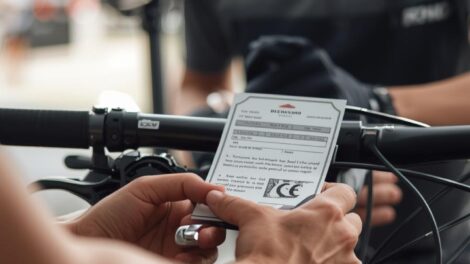
How Bicycle Safety Standards Work in Australia – And What They Mean for Used Bikes

When you buy a new bicycle in Australia, federal consumer law requires that it meets specific safety standards. But what happens when you buy second-hand? Does the same protection apply? And with Australia’s e-bike regulations having changed significantly in late 2025 and 2026, what does compliance actually mean for used e-bike buyers?

This guide explains the key Australian bicycle safety standards, who enforces them, and what they mean in practical terms for anyone buying or selling a used bicycle – pedal or electric – across Australia.

The Core Standard: AS/NZS 1927:1998

The primary mandatory standard governing pedal bicycles sold in Australia is AS/NZS 1927:1998 – Pedal Bicycles: Safety Requirements. This standard is mandated under Consumer Protection Notice No. 6 of 2004, enforced by the Australian Competition and Consumer Commission (ACCC).

The standard covers a wide range of requirements for bicycles sold in Australia, including structural integrity of the frame and fork, braking performance, handlebar and stem security, wheel and tyre specifications, lighting and reflector requirements and assembly instructions. Suppliers who fail to comply face fines and penalties, and may be required to conduct a product recall.

What this means for used bike buyers: the AS/NZS 1927:1998 standard applies to new bicycles at the point of sale. When a bike enters the second-hand market, the formal regulatory obligation for compliance falls away – but the standard still provides a valuable benchmark for what a safe, properly functioning bicycle should look like. A professional inspection assesses the bike against these performance expectations even when the original sale compliance is no longer formally required.

E-Bike Standards in Australia: Significant Changes in 2025–2026

Australia’s e-bike regulatory landscape changed substantially in late 2025 and early 2026, with major implications for used e-bike buyers and sellers.

Federal Import Laws (December 2025)

The Federal Government updated import laws in December 2025, now requiring all e-bikes imported into Australia to meet EN 15194 (2017) – the European standard for Electrically Power-Assisted Cycles (EPACs). This effectively stops the importation of e-bikes over 250W at the border, regardless of individual state provisions.

NSW Regulatory Changes (2026)

New South Wales historically permitted e-bikes up to 500W, but has moved to align with the national 250W limit. The NSW Government has introduced a three-year transition period: from 1 March 2029, only e-bikes meeting the 250W European standard will be road legal in NSW. Retailers must now clearly disclose compliance status before sale, and this obligation extends to second-hand sales.

Separately, from 1 February 2026, NSW mandated that all e-mobility devices (including e-bikes) must meet recognised safety certifications such as EN 15194 or UL 2849 to be sold – including in the second-hand market. Penalties for non-compliant corporate sellers can reach $825,000.

What EN 15194 Means in Practice

EN 15194 is the holistic European standard that verifies both safety and road legality. It tests frame strength, battery reliability, electrical systems, motor power (capped at 250W continuous), assist cut-off at 25 km/h and pedal-assist behaviour. An EN 15194 certification sticker means the bike is road-legal in every Australian state and territory.

UL 2849 is a separate standard that addresses electrical safety – battery, motor and controller fire risks. It does not include the comprehensive mechanical testing that EN 15194 covers. An e-bike with only UL 2849 certification may be electrically safe but isn’t necessarily compliant with road rules.

Rideworthy Tip: If you’re buying a used e-bike in Australia in 2026, ask the seller for the certification documentation. An e-bike without EN 15194 certification may be difficult to ride legally and could create insurance complications if you’re involved in an incident.

Roadworthiness vs. Legal Compliance: An Important Distinction

One of the most misunderstood aspects of bicycle safety in Australia is the difference between legal compliance (did the bike meet the standard when it was sold?) and current roadworthiness (is this specific bike, in its current condition, safe to ride?).

A bicycle that met AS/NZS 1927:1998 when new but has since suffered frame damage, brake wear or component deterioration is not roadworthy – even if it was perfectly compliant at the point of sale. Unlike motor vehicles in Australia, there is no mandatory periodic roadworthy inspection system for bicycles.

This is exactly where independent bicycle inspection services like Rideworthy fill a critical gap. A Rideworthy certified inspection assesses the bike’s current functional condition against professional standards – brakes, drivetrain, frame integrity, wheels and tyres – and produces a documented report that gives buyers genuine confidence in what they’re purchasing.

Learn more about what a certified inspection against safety standards actually involves and why it matters for both buyers and sellers.

What an Inspection Should Cover for Compliance and Safety

A professional inspection of a used bicycle in Australia should examine:

  • Frame and fork structural integrity – no cracks, corrosion, dents or impact damage
  • Brake system performance – pads and rotors (disc) or rim surface (rim brakes) must function to a safe standard
  • Drivetrain condition – chain, cassette and chainrings should be within safe wear limits
  • Wheel and tyre safety – tyres must be roadworthy with adequate tread; rims must be true and undamaged
  • Headset and handlebars – secure, no play, properly aligned
  • Lighting and reflectors (where fitted) – relevant to AS/NZS 1927:1998 requirements
  • For e-bikes: motor function, battery condition indicators, assist cut-off behaviour and certification markings

City-Specific Considerations Across Australia

While bicycle safety standards are nationally consistent under ACCC oversight, there are some city-specific factors Australian cyclists should be aware of:

  • Sydney and NSW: stricter e-bike regulations apply in 2026, with mandatory certification requirements for second-hand e-bike sales in NSW
  • Melbourne and Victoria: busy cycling infrastructure means brake performance is critical; disc brake condition on used bikes sold in Melbourne’s inner suburbs warrants particular attention
  • Brisbane and Queensland: Queensland follows national standards with no additional state-specific bicycle regulations beyond road rules
  • Perth and Western Australia: Bikelinc (powered by Crime Stoppers WA) is the key registration platform for checking stolen bike status
  • Adelaide and South Australia: SA follows national standards; the Mawson Trail and other gravel routes make gravel and mountain bike frame integrity particularly important
  • Canberra and the ACT: Bikelinc also covers the ACT; Canberra’s excellent cycling infrastructure and trail networks make both road and mountain bike inspections relevant

Your Rights as a Used Bike Buyer in Australia

While the AS/NZS 1927:1998 mandatory standard applies to new bicycles sold by businesses, the Australian Consumer Law (ACL) still provides protections for second-hand purchases. When buying from a business (including a bike shop selling used stock), consumer guarantees under the ACL apply – the bike must be of acceptable quality and fit for purpose.

When buying privately (person to person, as is common on Facebook Marketplace or Gumtree), the ACL consumer guarantees do not apply in the same way. This is precisely why an independent inspection report is your most important protection in a private sale.

Rideworthy connects buyers and sellers with certified inspection workshops across Sydney, Melbourne, Brisbane, Adelaide, Perth and Canberra. Our structured inspection reports document the current condition of any bicycle – giving you the evidence you need to buy or sell with confidence. Book your bicycle inspection now!

Bicycle Safety Checklist: What Every Rider Needs to Know Before Hitting the Road

Cycling offers freedom, convenience and enjoyment. Whether you ride to work, train on weekends or simply enjoy local paths, safety should never be an afterthought. A bicycle may appear perfectly fine at a glance, yet small mechanical issues can develop over time without obvious warning.

A simple pre-ride safety check takes only a few minutes, but it can prevent accidents, reduce repair costs and give you confidence every time you set off. Think of it as a routine habit rather than a technical task.

Below is a practical and realistic bicycle safety checklist that every rider should follow before hitting the road.

Start with Tyres and Wheels

Your tyres are the only part of the bicycle that touches the ground. Their condition directly affects balance, grip and braking distance.

Begin by checking tyre pressure. Underinflated tyres make pedalling harder and increase the likelihood of punctures. Overinflated tyres reduce traction and can make the ride unstable, especially on uneven surfaces.

Visually inspect for:

  • Cracks or splits in the rubber
  • Worn tread
  • Embedded debris, such as small stones or glass

Spin each wheel gently to ensure it rotates smoothly. If you notice wobbling or rubbing against the brake pads, the wheel may be misaligned and require adjustment.

Strong, properly inflated tyres provide a stable and controlled ride.

Test Brakes Before Every Ride

Brakes are the most critical safety component on any bicycle. Never assume they are working properly without checking.

Squeeze both brake levers firmly. They should feel responsive and not pull all the way back to the handlebars. The bicycle should stop quickly and evenly when pushed forward and braked.

Pay attention to:

  • Worn brake pads
  • Loose or frayed cables
  • Unusual squeaking or grinding sounds

If braking feels weak or inconsistent, do not ignore it. Addressing small brake issues early can prevent dangerous situations later. For a thorough breakdown of exactly what to examine, read our dedicated guide on checking your brake system in detail.

Check the Chain and Gearing System

A well-functioning drivetrain ensures smooth acceleration and control. Problems with the chain or gears can interrupt balance and rhythm during riding.

Look at the chain closely. It should appear lightly lubricated but not overly greasy. Rust, stiffness or visible dirt build up suggests it needs cleaning and lubrication.

Shift through the gears while stationary or during a short test ride. Gears should change smoothly without hesitation or loud clicking noises. Difficulty shifting often indicates cable tension issues or wear in the drivetrain.

Ignoring drivetrain problems can lead to more expensive repairs and reduced riding enjoyment.

Ensure Handlebars and Saddle Are Secure

Control and comfort rely heavily on stable contact points.

Hold the front wheel firmly between your legs and try turning the handlebars. They should not move independently of the wheel. Any looseness may indicate a problem with the stem or headset.

Sit on the saddle and apply slight pressure side to side. It should remain secure without slipping. A loose saddle can affect posture and balance, especially on longer rides.

These simple checks take seconds but make a significant difference in control.

Inspect the Frame for Visible Damage

Although less common, structural issues can develop over time, particularly if a bicycle has been involved in a fall or collision.

Examine the frame for:

  • Cracks around weld joints
  • Dents or deep scratches
  • Signs of corrosion

Even small cracks can weaken the overall structure. If you notice anything unusual, it is best to seek professional advice before riding.

Frame integrity is fundamental to rider safety.

Confirm Lights and Reflectors Are Working

If you plan to ride early in the morning, during dusk or at night, visibility becomes essential. Check that your front and rear lights are functioning properly and that your batteries are charged.

Reflectors should be clean and clearly visible. In busy urban environments, being seen by motorists is just as important as seeing the road ahead.

Even in daylight, reflective elements improve visibility in shaded or low-light areas.

Wear Proper Protective Gear

While this checklist focuses on the bicycle itself, rider preparation matters equally. A well-fitted helmet significantly reduces the risk of serious head injury.

Ensure the helmet:

  • Fits snugly without excessive movement
  • Sits level on your head
  • Has secure and properly adjusted straps

Consider wearing reflective clothing when riding in traffic. Gloves can improve grip and protect your hands during falls.

Safety is a combination of mechanical reliability and personal responsibility.

Build the Habit, Not the Excuse

One of the most common reasons riders skip safety checks is a lack of time. Yet a thorough inspection rarely takes more than five minutes. Building this routine into your preparation quickly becomes second nature.

Experienced cyclists often develop a simple flow. Tyres, brakes, chain, handlebars, quick visual frame scan, then lights. With repetition, it becomes effortless.

Consistency is what protects you.

Final Thoughts

A bicycle safety checklist is not about being overly cautious. It is about riding with confidence. Small mechanical issues can escalate quickly if left unnoticed, but they are usually easy to detect with regular attention.

By checking tyres, brakes, gears, structural integrity and visibility equipment before each ride, you significantly reduce risk and improve overall performance.

Cycling should feel smooth and reassuring, not uncertain. When you know your bicycle has been properly checked, every ride becomes more enjoyable and controlled.

Taking a few minutes before you leave home can make all the difference between a safe journey and an avoidable problem. Safe riding begins before the first pedal stroke.

Top 7 Maintenance Tips Every Bicycle Owner Should Know

Owning a bicycle is not just about riding. It is about looking after something that gives you freedom, fitness and convenience. Whether you use your bicycle for commuting, weekend rides or serious training, proper maintenance ensures it remains safe, efficient and enjoyable to ride.

Many mechanical issues do not appear overnight. They develop slowly through wear and neglect. The good news is that most common problems can be avoided with simple and consistent care. You do not need to be a professional mechanic. You simply need awareness and routine.

Essential Maintenance Practices Every Bicycle Owner Should Follow

1. Maintain Correct Tyre Pressure for Safety and Efficiency

Tyres are your direct contact with the road. Their condition affects grip, comfort and control.

Riding with low tyre pressure can cause:

  • Increased risk of punctures
  • Reduced efficiency
  • Poor handling

Overinflated tyres, on the other hand, can reduce traction and make the ride harsh.

How to Manage Tyre Pressure

  • Check pressure at least once a week
  • Use a pump with a pressure gauge
  • Follow the recommended PSI printed on the tyre sidewall

Well inflated tyres roll smoothly, improve braking performance and reduce unnecessary strain on your legs.

2. Keep the Chain Clean and Properly Lubricated

The chain plays a central role in transferring power from your pedals to the wheels. When it becomes dry, rusty or clogged with dirt, performance suffers immediately.

A neglected chain can lead to:

  • Rough gear shifting
  • Accelerated wear of cogs and chainrings
  • Unpleasant grinding noises

Basic Chain Care Routine

  1. Wipe the chain clean with a cloth
  2. Apply suitable bicycle chain lubricant
  3. Remove excess oil to prevent dirt buildup

Avoid over-lubricating. Too much oil attracts grime and can cause faster wear.

Regular chain maintenance keeps your drivetrain smooth and extends the lifespan of key components.

3. Inspect Brakes Before Problems Arise

Brakes are not an area where you can afford compromise. Responsive braking is essential for road safety, particularly in busy urban environments or during wet conditions.

Check for:

  • Worn brake pads
  • Frayed cables
  • Uneven braking response
  • Squeaking or grinding sounds

Signs Your Brakes Need Attention

  • The lever pulls too close to the handlebars
  • The bicycle does not stop quickly
  • The bicycle pulls to one side while braking

Address brake concerns immediately. Even minor adjustments can make a significant difference in control and confidence.

4. Monitor Gear Shifting and Drivetrain Performance

Smooth shifting is often taken for granted until it stops working properly. If your bicycle hesitates between gears or produces clicking noises, it is signalling that something needs attention.

Common causes include:

  • Cable tension issues
  • Misaligned derailleur
  • Worn chain

Ignoring these signs can result in more expensive repairs later. A properly adjusted drivetrain improves efficiency and makes riding far more enjoyable.

5. Check and Tighten Key Bolts and Components

Vibration from regular riding can loosen bolts over time. Loose components can affect handling and safety.

Pay particular attention to:

  • Handlebars
  • Stem
  • Seat post
  • Pedals
  • Wheel skewers

Use the correct tools and apply appropriate torque. If unsure, seek professional assistance rather than guessing. Over-tightening can damage parts just as easily as leaving them loose.

6. Clean Your Bicycle to Prevent Long-Term Damage

Dirt and moisture are silent enemies. They corrode metal components and accelerate wear.

Cleaning your bicycle allows you to:

  • Spot cracks or damage early
  • Identify worn parts
  • Prevent rust

Proper Cleaning Method

  • Use mild soap and water
  • Avoid high-pressure sprays near bearings
  • Dry thoroughly after washing

Routine cleaning does more than improve appearance. It protects performance.

7. Schedule Periodic Professional Servicing

Even with regular home maintenance, a professional service is invaluable. Trained technicians can detect structural or mechanical issues that are not immediately obvious.

Professional servicing typically includes:

  • Comprehensive safety inspection
  • Brake and gear adjustments
  • Bearing checks
  • Frame assessment

If you ride frequently, an annual service is a wise investment. For heavy commuters, servicing may be required more often.

Not sure how often that should be for your riding style? Read our full guide on how often to get a professional inspection based on how and where you ride.

Why Preventive Maintenance Matters

Preventive maintenance saves money over time. Replacing a worn chain early costs far less than replacing an entire drivetrain. Adjusting brakes promptly prevents accidents.

More importantly, maintenance builds trust in your bicycle. When you know it has been properly looked after, every ride feels smoother and more reliable.

A well-maintained bicycle responds better, lasts longer and retains more value if you ever decide to sell it. Whether your bicycle is brand new or secondhand, consistent care ensures it performs as it should.

Looking after your bicycle is not complicated. It is about awareness, habit and taking small actions regularly. When you make maintenance part of your routine, your bicycle will reward you with safe and dependable performance for years to come.

Scroll Up